New programme · Activated 2025 · Hôpital de Kyeshero, Nord-Kivu
Care Before the First Breath
Our newest module follows pregnant women through every WHO-recommended contact — and connects directly to birth registration on the day of delivery.
- Good Health and Well-being
- Gender Equality
Why this matters
In eastern DRC, the leading causes of maternal and newborn death — haemorrhage, eclampsia, sepsis, malaria, severe anaemia — are almost all preventable when a pregnancy is followed properly. The World Health Organization recommends at least eight antenatal-care contacts during pregnancy, each one a chance for the midwife to catch an early warning sign and act before it becomes an emergency. In a conflict zone, that pathway routinely breaks: paper antenatal cards are lost when families flee, women change facility between visits, and the next clinician opens a blank file. A pregnancy that started well ends in an emergency that nobody saw coming.
- WHO recommends a minimum of eight antenatal-care contacts per pregnancy (ANC8+) — a target most Congolese women do not currently reach.
- Malaria in pregnancy is one of the leading preventable causes of maternal anaemia and low birth weight in central Africa, yet preventive treatment (IPTp) and bed nets reach only a fraction of women who need them.
- Pre-eclampsia and eclampsia kill more women in low-resource settings than almost any other obstetric cause — and they are detectable, at a routine antenatal visit, with a blood-pressure cuff and a urine dipstick.
- A continuous, digital pregnancy record is the difference between a missed warning sign and an early referral — and between a healthy birth and an emergency caesarean.
Our solution
The eGov antenatal-care (ANC) module runs on the same offline-capable tablets as our birth registration system. At every visit, the midwife records gestational age, blood pressure, anaemia screening, urine albuminuria (a pre-eclampsia warning sign), fetal heartbeat, fetal movements and presentation, and the preventive interventions she has delivered — IPTp malaria prophylaxis, insecticide-treated bed nets, deworming. The record syncs whenever the tablet has connectivity, so the woman's full pregnancy history travels with her — even when she has to leave home.
Live results — Hôpital de Kyeshero
703
ANC contacts recorded
136
Pregnant women followed
~5
Avg contacts per woman (above ANC4+ floor)
615
Records added in 2026 alone
What every visit captures
Every ANC contact in the system records the full WHO clinical bundle. Nothing is left to memory or to the next clinician's guesswork.
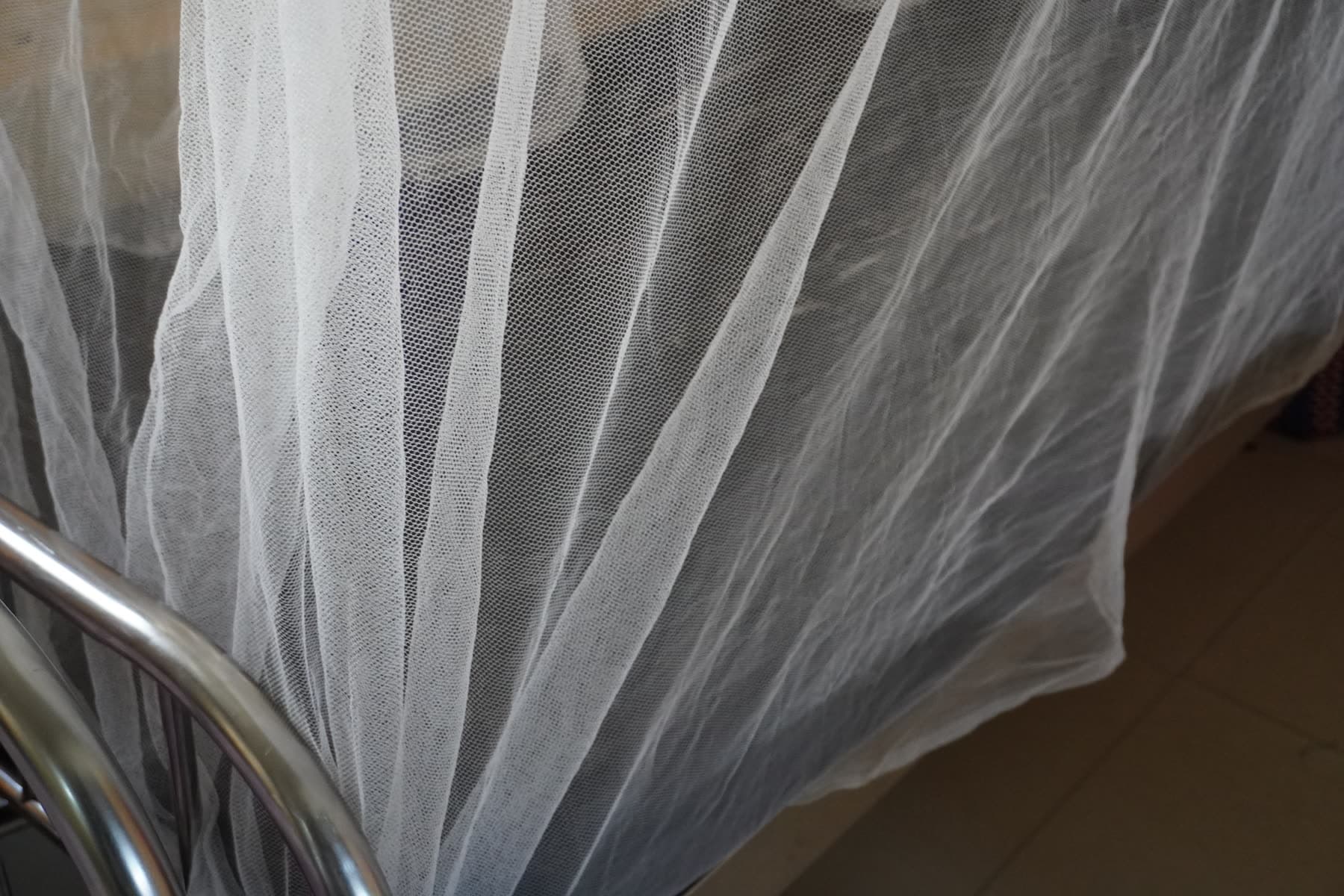
Preventive package
- IPTp — intermittent preventive treatment for malaria in pregnancy
- ITN — insecticide-treated bed net dispensed
- Deworming dose given
- Anti-malaria treatment when indicated
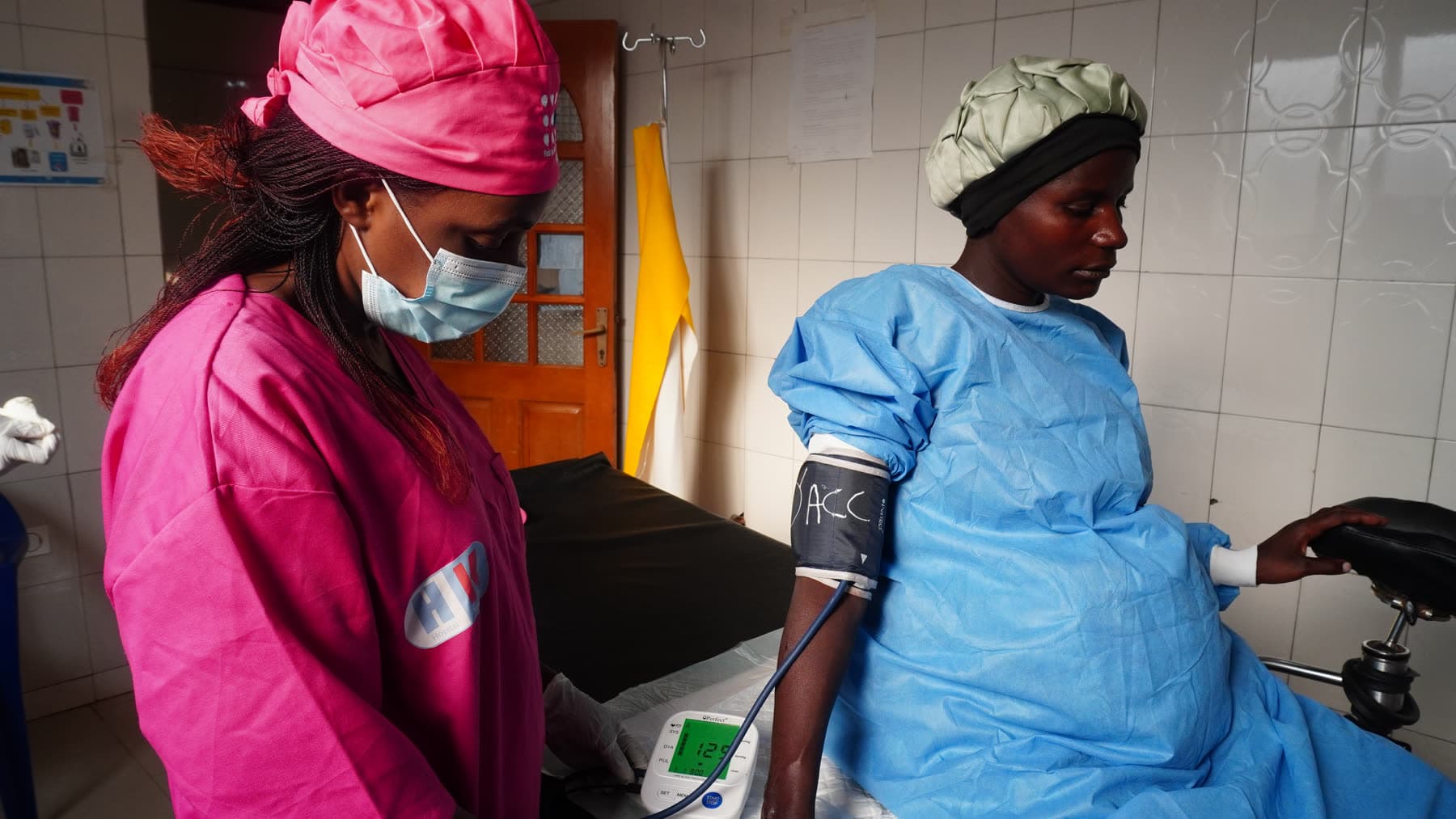
Risk screening
- Severe anaemia flag
- Raised blood pressure (early eclampsia warning)
- Albuminuria — protein in urine (pre-eclampsia indicator)
- Glycosuria — sugar in urine (gestational-diabetes indicator)
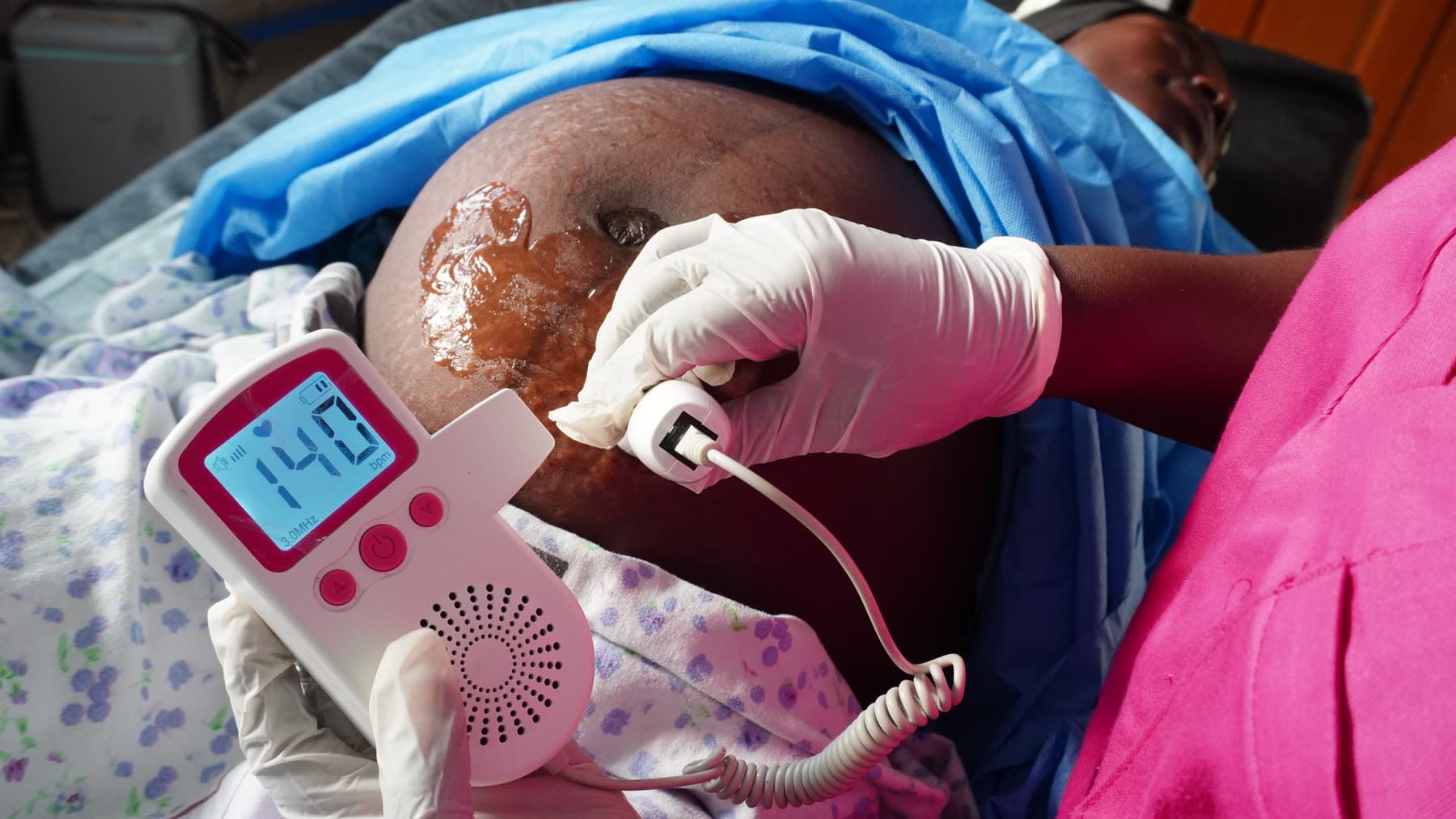
Fetal monitoring
- Fetal heartbeat — present and rate-checked at every visit
- Fetal movements — mother's report logged and trended
- Fetal presentation — checked from the third trimester onward
- Gestational age in weeks — to time interventions correctly
One record, from first heartbeat to legal identity
The ANC module is built on the same data spine as our birth registration system. The pregnancy followed across eight visits ends with a delivery in the same hospital, on the same tablet, in the same record — and the newborn's first legal certificate is issued before mother and child go home. Nothing in this pathway falls through the cracks between paper systems, because there is no paper.
WHO ANC schedule
We track every woman against the WHO contact schedule. The graph in our internal dashboards shows how many women reach each milestone — so a midwife knows, in real time, who has missed her next visit.
ANC1
First contact, ideally in the first trimester
ANC4+
Four contacts — the previous WHO floor
ANC8+
Eight contacts — the current WHO recommendation
Where we go next
- Add the ANC module at every hospital already running our birth registration system — 14 facilities to start.
- Connect the ANC record to a postnatal-care module so mother and newborn are followed for the first six weeks after delivery.
- Expose anonymous, aggregate trends to provincial health authorities so they can act on what the data shows — anaemia hotspots, eclampsia clusters, missed-visit rates.
- Train 100+ additional midwives on the platform across Nord-Kivu and Sud-Kivu.
About these numbers
This module was activated in 2025, with 88 records that year and 615 added in 2026. The current cohort is small but the methodology is sound: every metric on this page is derived from real, encrypted clinical records, not estimates. We will publish updated figures as the programme scales.
Fund a full pregnancy pathway
$10 covers a full WHO-recommended ANC8+ pregnancy pathway for one mother — eight visits, the preventive bundle, and a digital record that ends with her newborn's birth certificate.